Summary: The main difference between a mesh coil and a regular vape coil is the shape of the heating element. Mesh coils use a perforated metal strip or mesh structure, while regular coils typically use wire wound into a spiral. This affects heating speed and heat distribution, but battery consumption, e-liquid use and coil lifespan also depend on power, liquid supply and device design.
For Australian readers researching vape specifications, terms such as mesh coil, dual mesh and coil resistance describe different features. Understanding these terms can help you interpret technical information accurately.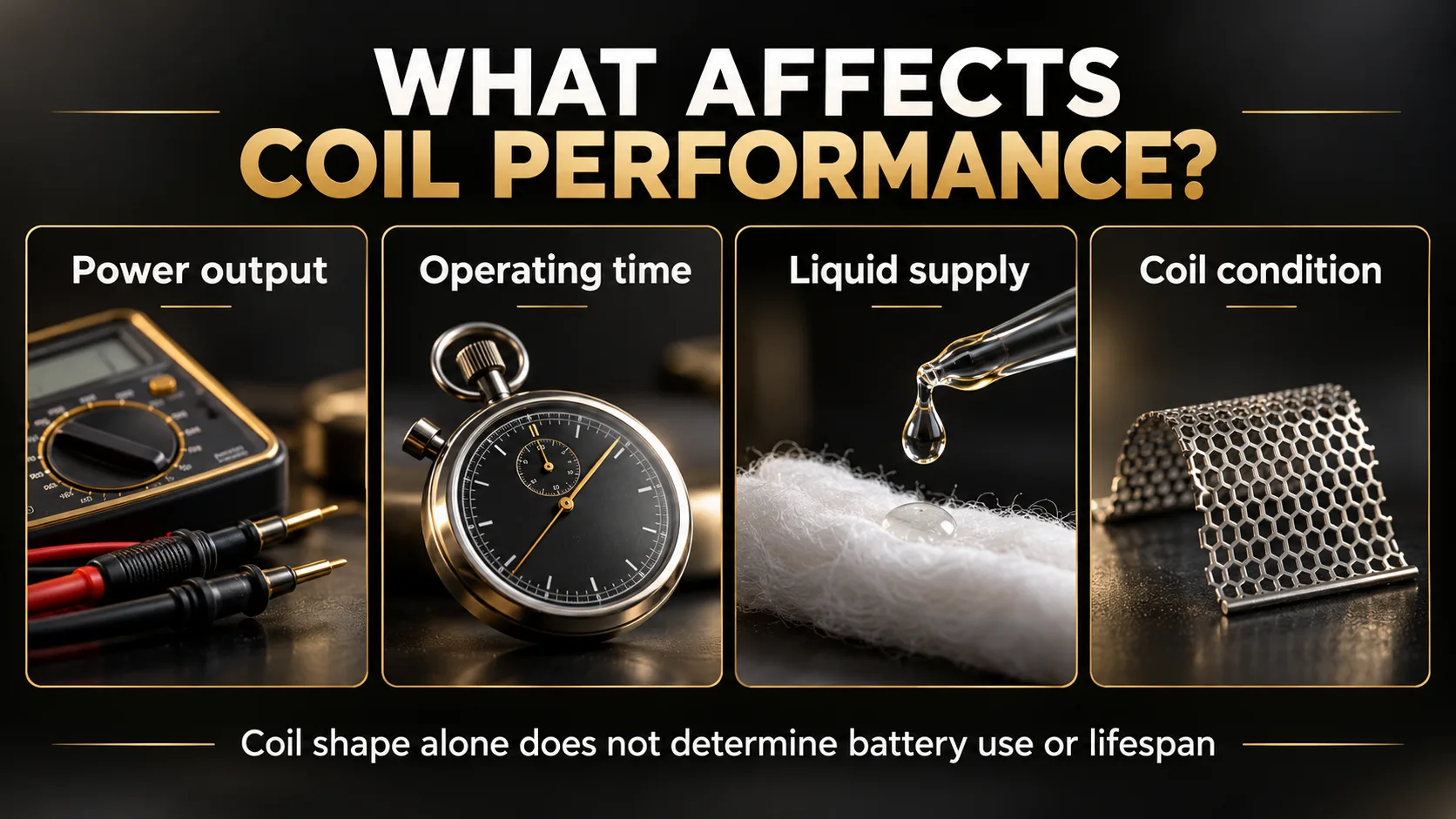
1. How Do Mesh Coils and Regular Coils Differ in Structure?
A vape coil assembly generally contains a metal heating element and wicking material. The wick absorbs e-liquid, and the heating element converts electrical energy into heat to produce an aerosol.
“Regular coil” is not a universally standardised technical category. In everyday use, it usually refers to a traditional wire-wound coil.
Innokin’s technical information describes mesh coils as replacing traditional spiral wire with mesh strips, providing a relatively large heating surface with low metal mass. Source: Innokin
2. Why Do Mesh Coils Often Heat More Evenly?
A mesh heating element can spread heat across a broader contact area. When the wick is adequately saturated and sits evenly against the mesh, this design can help reduce localised hot spots.
However, mesh coils can still produce a burnt taste or overheat a dry wick. Insufficient e-liquid, poor liquid delivery or uneven contact can cause overheating.
Even heating is a potential design advantage, rather than a guarantee that a coil will never burn. Source: Innokin
3. Does Coil Structure Affect the Vaping Experience?
Coil structure can affect performance, but the labels “mesh” and “regular” do not tell the whole story.
Heating area and response time influence how e-liquid is heated. The resulting experience also depends on:
- Power output.
- Airflow.
- E-liquid formulation.
- Wicking performance.
- The device’s internal design.
A “Mesh Coil” specification alone does not establish that a device will produce stronger flavour or more aerosol.
When comparing technical specifications, consider coil resistance alongside the manufacturer’s stated power range. Different coils can have different operating requirements. Source: Innokin Support
4. Do Mesh Coils Use More Battery Power and E-Liquid?
There is no fixed answer based on coil shape alone.
Battery consumption mainly depends on actual power output and operating time. For example, running a heating element at a higher power for the same duration generally requires more electrical energy.
E-liquid consumption also depends on power, activation duration and liquid delivery.
Comparing a high-power mesh coil with a low-power wire-wound coil does not isolate the effect of mesh construction. Differences in consumption may largely reflect their operating conditions.
Claims that mesh coils “always save battery” or “always use more e-liquid” are therefore too broad.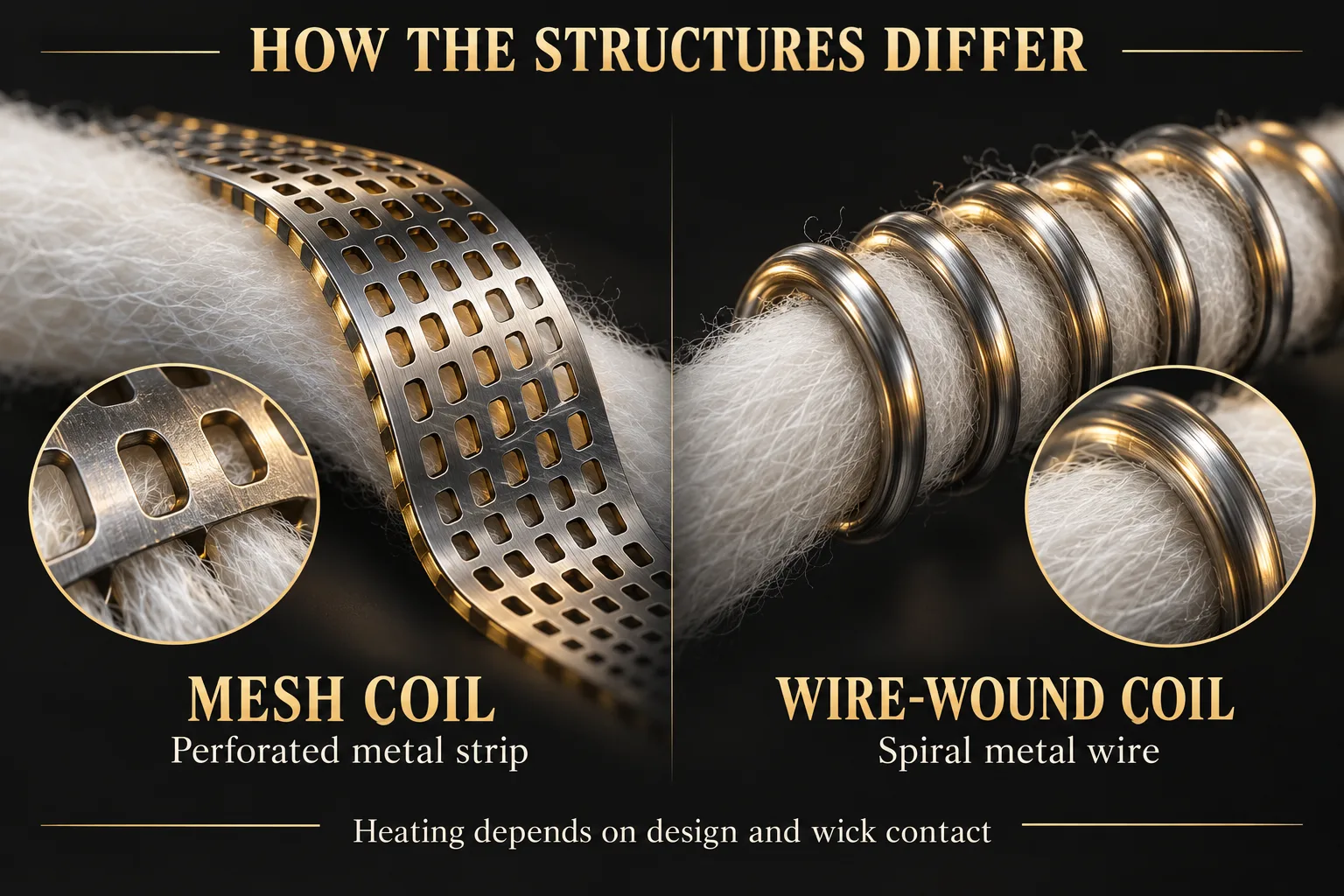
5. Do Mesh Coils Last Longer Than Regular Coils?
Not necessarily. More even heating may help reduce localised overheating, but it does not mean every mesh coil will outlast every wire-wound coil.
Actual coil lifespan depends on several factors, including liquid supply, residue build-up, operating temperature and manufacturing quality.
If a device develops a persistent burnt taste, unusual overheating or leaking, stop using it and follow the manufacturer’s instructions. Sealed disposable devices should not be dismantled to replace or repair their internal heating elements.
6. Are Mesh, Dual Mesh and Coil Resistance the Same Thing?
No. These terms describe different aspects of a coil.